

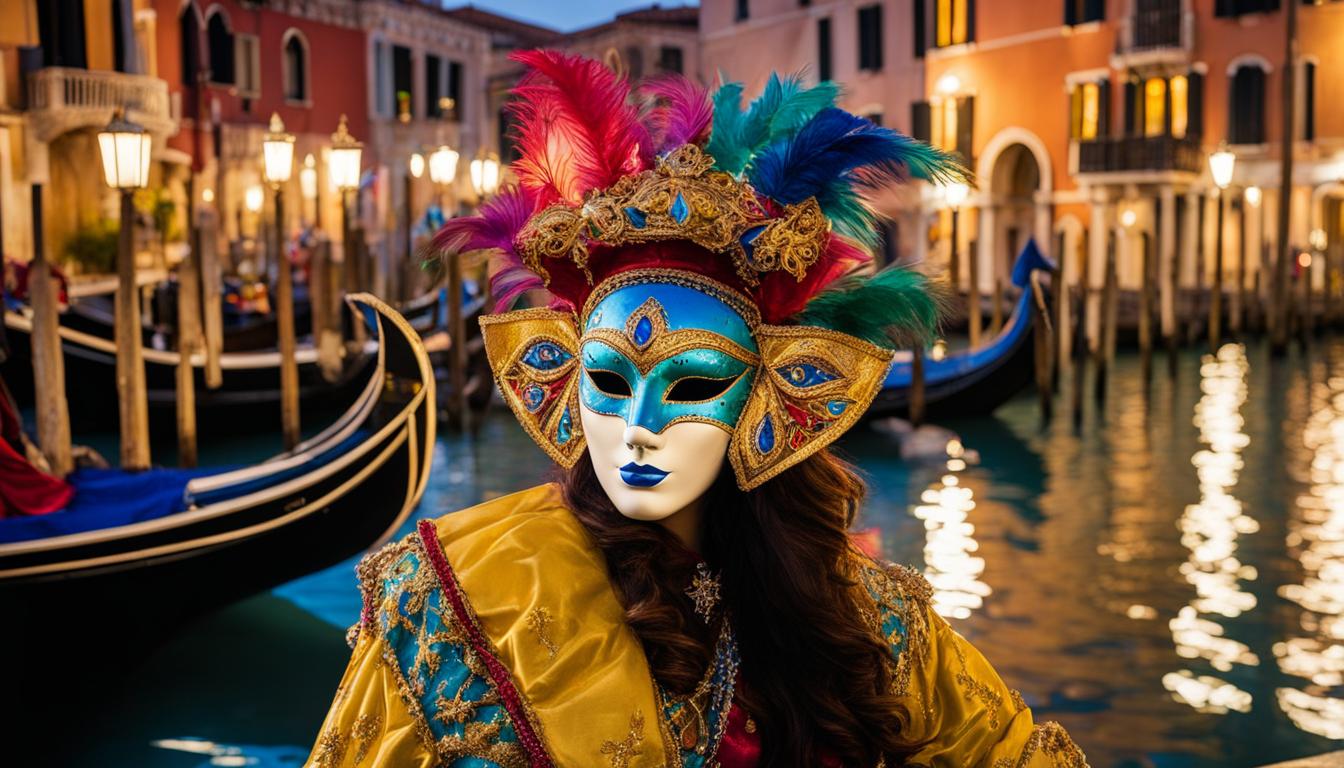
The Magic of the Venice Carnival
In January we are all entering the period of carnival, which is great time to enjoy life, dance and play. Only few celebrations in the world capture cultural diversity and historical depth as vividly as the Carnival of Venice, which is personally one of my favourites.
With its ornate masks, elaborate costumes, and centuries-old traditions, the carnival is more than a festive spectacle. It is a living reflection of Italian values, social history, and cultural contrasts.
Express Yourself!
In many cultures, festivals are loud, colorful, and openly expressive. Venice Carnival, however, balances extravagance with restraint. Costumes are visually striking, and participants often move with elegance and mystery. This reflects a cultural appreciation for aesthetic beauty, symbolism, and subtlety, rather than overt display. Additionally, the settings are completing the magical festival, which is set in beautiful historical architecture of Piazza San Marco, St. Mark’s Basilica, Doge’s Palace area, narrow streets and canals, and theatres.
The Power of the Mask
One of the most fascinating cultural elements of the Venetian Carnival is the mask. Historically, masks allowed people to cross social boundaries. Nobles and commoners mingled freely, identities temporarily erased.
In contrast to cultures that emphasize individuality and self-expression, Venice Carnival celebrates anonymity and equality, even if only for a moment.
Slowing the Time
Visitors from fast-paced cultures often notice a different rhythm in Venice. Carnival events unfold slowly strolling through narrow streets, pausing for conversation, savouring moments. This highlights a cultural value placed on presence, history, and experience, rather than efficiency or speed.
Mixture of Old and New
Today, the Carnival of Venice attracts people from all over the world, each bringing their own customs, expectations, and interpretations.
The result is a beautiful cultural exchange that honors the Italian tradition and craftsmanship. Also, the visitors bring modern creativity and global influences. Together,
they create a dialogue between past and present, local and global, giving a modern twist to existing traditions.
The Venice Carnival reminds us that cultural differences are not barriers. They are invitations to slow down, to see through another lens, and to appreciate that celebration can be both joyful and meaningful, playful and profound.
As masks come off and Venice returns to everyday life, the lessons remain. We need to understand culture that begins with curiosity, respect, and the willingness to step into someone else’s world, even if just for a short moment of time.
Vocabulary
vividly – doing something that is very clear, bright, detailed, or lifelike (żywy)
ornate – embellished, adorned (udekorowany)
restraint – calmed and controlled (powściągliwość)
subtlety – refinement (subtelność)
overt – public, open (otwarty)
boundaries – a limit (granice, ograniczenie)
nobles – belonging to aristocracy (szlachta)
commoners – a person without noble rank, a member of the general populace (zwykli ludzie)
erased – removed or destroy something (wymazany, skreślony)
equality – a situation in which men and women, people of different races, religion, etc. are treated in the same way (równość)
craftsmanship – skill at making things (rzemiosło)
lens- understand or interpret a subject from a specific point of view (obiektyw, poprzez pryzmat)